When we talk about self-care, we often think about rest, silence, sleep, a walk, or the possibility to take a break. All of these things matter. But for people who have been forced to leave their homes and adapt to life in a new country, self-care may also look different.
Sometimes it is a message asking where to turn. Sometimes it is a request for help with documents, medical questions, housing, work, or social services. Sometimes it is a conversation with someone who can listen without judgement and help make sense of the next steps.
Adaptation after forced displacement can be difficult not only practically, but also emotionally. A person may need to understand a new system, a new language, new rules, services, and everyday decisions. Over time, exhaustion, anxiety, loneliness, or the feeling of having to manage everything alone can build up.
But self-care does not mean going through everything alone.
Asking for support is not weakness, and it is not “too much” for others. It is a way to recognise that a situation is difficult and to allow yourself to receive help where it is needed. It can be the first step toward more clarity, safety, and stability.
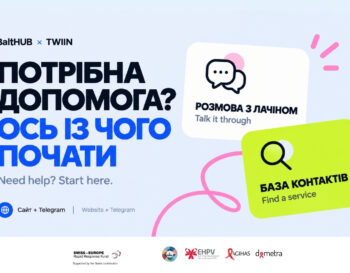
RefAid BaltHUB helps Ukrainian refugees navigate available support, find relevant services, and take the next step in their situation. Support may relate to different needs: social navigation, medical services, documents, psychosocial support, or other questions that arise during adaptation.
It is important to remember: you do not need to have a perfectly formulated request. You can start with a simple message: “I am struggling, and I do not know where to begin.”
Sometimes, this is what self-care looks like.
You do not have to go through adaptation alone. If you need support or do not know where to turn, you can contact RefAid BaltHUB and briefly describe your situation.