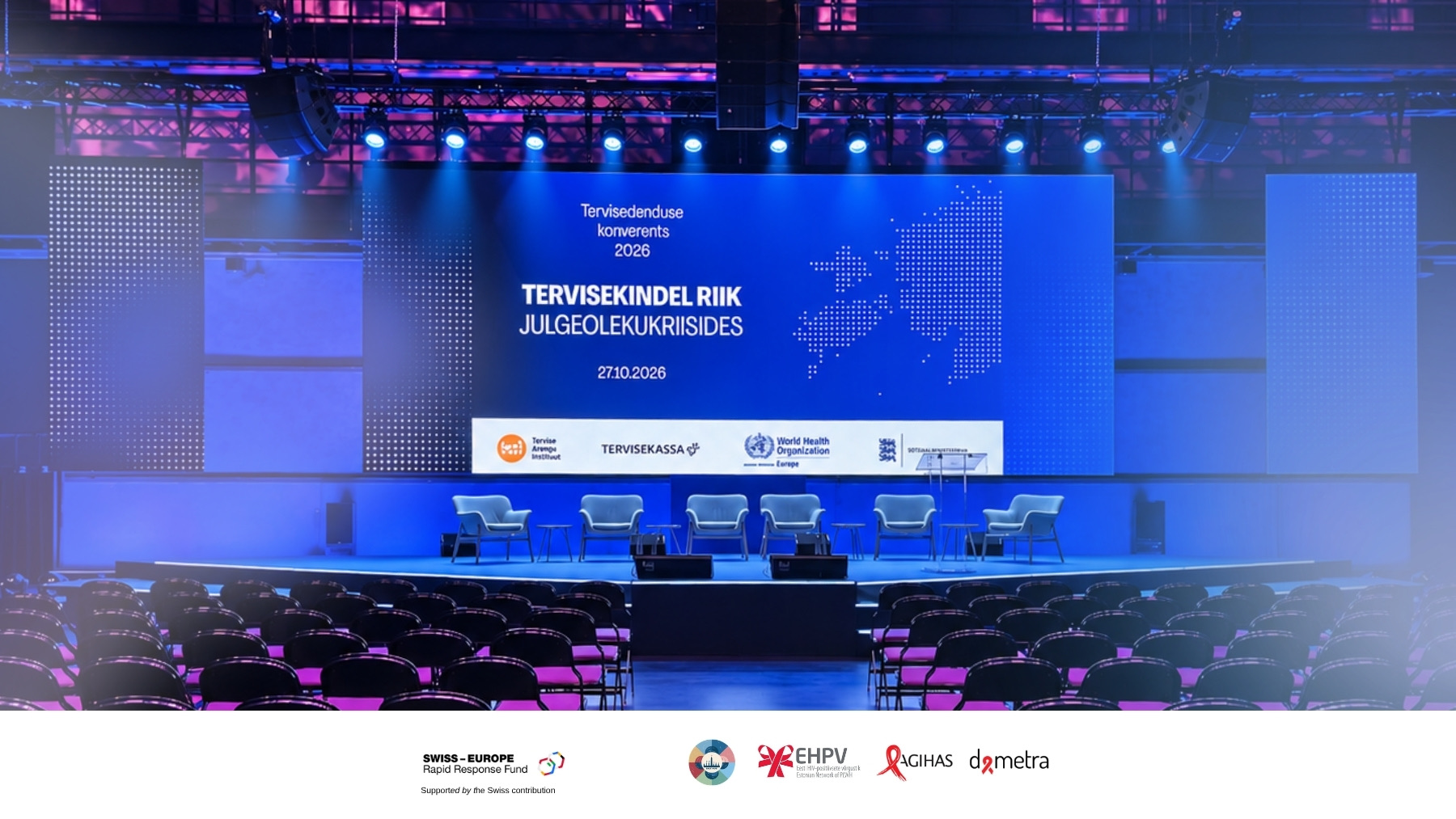
On 27 October 2026, representatives of the Estonian Network of People Living with HIV (EHPV) and RefAid BaltHUB participated in a national conference in Tallinn dedicated to strengthening public health, healthcare resilience, and Estonia’s preparedness for future crises.
The conference, titled “A Country Ensuring Health Security in Times of Crisis,” brought together representatives of government institutions, healthcare and social services, security organisations, the scientific community, and civil society.
At the centre of the discussions was an important question: How can Estonia prepare for crises while protecting people’s health, well-being, and access to essential services?
People’s Health Is the Foundation of National Resilience
Crisis preparedness is often associated with emergency response plans, technological solutions, and national security infrastructure. However, an effective response also depends on the health, knowledge, and resilience of the population.
While digital technologies, artificial intelligence, and automated systems are becoming increasingly important, people remain at the centre of any effective crisis response.
A resilient society requires accessible healthcare, effective prevention, reliable information, and support systems capable of functioning even under exceptional circumstances.
During the conference, three priorities for strengthening Estonia’s healthcare system were highlighted.
1. Ensuring the long-term availability of healthcare
Healthcare systems must balance the resources required for everyday treatment with the additional capacity needed to maintain essential services during emergencies.
2. Improving efficiency without compromising resilience
Digital solutions can help healthcare professionals work more effectively and make better use of available resources. At the same time, growing dependence on digital infrastructure makes backup systems and alternative service delivery methods essential.
3. Reducing vulnerability before a crisis occurs
Prevention, continuous care for people with chronic health conditions, and efforts to reduce health inequalities can strengthen both individual well-being and society’s overall preparedness.
Continuity of Care Is Essential for Vulnerable Communities
For EHPV and RefAid BaltHUB, one of the most important aspects of crisis preparedness is ensuring that people requiring ongoing healthcare do not lose access to essential services.
This is particularly relevant for people living with HIV and other chronic conditions who depend on continuous treatment, access to medication, medical monitoring, and professional support.
Disruptions to healthcare services can create additional risks for individuals who are already experiencing social or economic vulnerability.
The experience of supporting Ukrainian refugees also demonstrates how quickly familiar support systems can become inaccessible when people are forced to leave their homes.
Language barriers, unfamiliar administrative procedures, limited knowledge of available services, and difficulties accessing healthcare can make an already challenging situation more complicated.
Preparing for crises therefore means not only maintaining healthcare infrastructure but also ensuring that people know where to turn and can receive appropriate assistance when they need it.
The Role of RefAid BaltHUB in Building Accessible Support
Through the Swiss-supported RefAid BaltHUB project, EHPV and its partners work to improve access to information, counselling, psychosocial assistance, peer support, and essential services for Ukrainian refugees in Estonia, Lithuania, and Latvia.
The project focuses on helping people navigate healthcare and social support systems, identify available services, and overcome barriers that may prevent them from receiving necessary assistance.
This community-based approach is especially important for people who face additional vulnerabilities, including those who require continuous healthcare or experience discrimination and social exclusion.
The work of RefAid BaltHUB demonstrates why cooperation between government institutions, healthcare providers, social services, and civil society organisations matters.
Effective crisis preparedness depends not only on the availability of resources but also on the ability to connect people with the right support quickly, safely, and without discrimination.
Building a Healthcare System That Protects Everyone
Participation in the conference provided EHPV and RefAid BaltHUB with an opportunity to engage in a broader national dialogue on the future of Estonia’s healthcare system and the importance of inclusive, person-centred support.
The discussions reinforced a key principle: healthcare resilience is built long before an emergency occurs.
It begins with everyday access to medical services, effective prevention, reducing inequalities, supporting people with chronic health conditions, and strengthening cooperation between institutions and communities.
For EHPV and RefAid BaltHUB, these priorities remain closely connected to their ongoing work with Ukrainian refugees and other vulnerable populations.
A strong country is not only one that can respond to a crisis. It is one that can protect people’s health, preserve their dignity, and ensure that essential support remains accessible even in the most difficult circumstances.