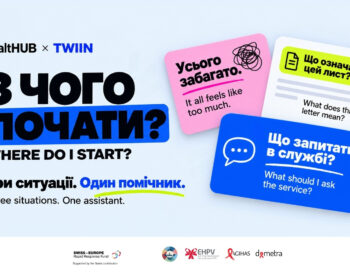

Sometimes looking for information independently is enough. But there are situations when endless searching, reading different websites, and trying to understand unfamiliar procedures only creates more confusion.
In these moments, asking for a consultation can save time, reduce stress, and help you understand what to do next.
Here are five situations when it may be better to ask for support instead of continuing to navigate everything alone.
1. You are confused about documents or registration
You may not know which document is needed, where to submit it, how to complete a form, what an official response means, or what step comes next.
When procedures are unfamiliar, even a small misunderstanding can delay the process. A consultation can help clarify the requirements and explain possible next steps.
2. You need a healthcare or social service but do not know where to turn
Sometimes the difficulty is not understanding that support exists, but identifying which service is relevant to your situation.
A counsellor can help you understand available options, explain where to start, and, when needed, provide a referral to an appropriate service.
3. A state procedure becomes more confusing with every new step
Online portals, appointments, forms, official letters, and different institutions can quickly become difficult to navigate, especially in a new country.
If every new step creates more questions, asking for navigation may be more useful than continuing to search for answers alone.
4. You do not know where to begin with employment or adaptation
Questions about employment are often connected with other issues: documents, language, registration, local rules, access to services, or family circumstances.
In these situations, a consultation can help break a complicated situation into smaller, clearer steps and identify what may be useful to address first.
5. Your situation feels too complicated to explain
Not every request fits neatly into one category.
Sometimes several challenges happen at once, or a person simply does not know what kind of service they need. You do not have to define the problem in professional terms before asking for help.
You can start with a simple message:
“I am in a difficult situation, and I don’t know where to begin.”
At RefAid BaltHUB, you can reach out even if you are not yet sure what kind of support you need. A counsellor can help clarify your situation, explain possible options, and identify a useful next step.
Asking for a consultation does not mean you failed to find the answer yourself. Sometimes it is simply the most practical way to get reliable navigation and move forward with more clarity.
Save this information or share it with someone who may need support.