
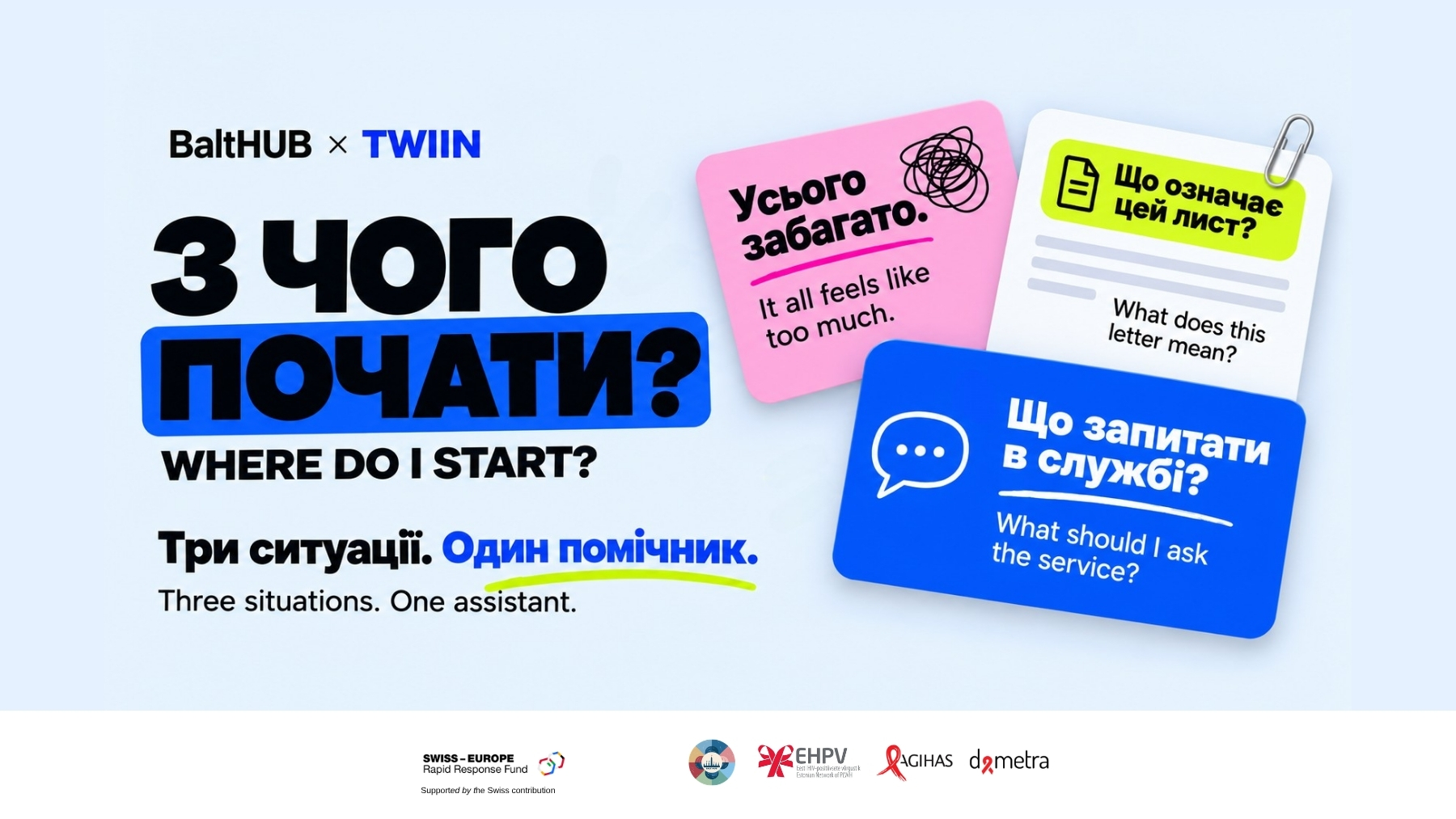
A growing to-do list, an unfamiliar phrase in a letter, a phone call you keep putting off because you do not know what to ask.
These are different concerns, but they can begin with the same question: “Can you help me think this through?”
Lachin, the TWIIN AI assistant available through BaltHUB, can offer support, explain things in simpler terms and help you prepare a possible next step. You can speak or type in your own words.
Here are three examples to try.
1. Everything feels like too much
After moving, everyday tasks can pile up: paperwork, appointments, finding your way around and staying in touch with people back home. It can be difficult to decide what deserves your attention first.
You can start by describing that feeling, without having a clear plan.
Try asking:
“Since moving, everything feels overwhelming. Help me choose one small step for today.”
The conversation can focus on a manageable next step rather than trying to address every concern at once. You can explain what feels most pressing or ask for a simpler suggestion.
A conversation with Lachin can be a starting point for support. It is not a replacement for a psychologist or other qualified professional when you need that help.
2. You can read the letter—but what does it mean?
A letter from an institution may contain unfamiliar terms. Before you can respond, you need to understand what to clarify.
Try asking:
“A letter asks me to provide proof of residence. Explain what that means in simple terms and what I should clarify with the institution.”
Use the conversation to understand the wording and prepare follow-up questions. For example, you may want to ask the institution which documents it accepts, how to submit them and what deadline applies.
Leave out names, identification numbers, addresses and other personal details when describing the letter. Confirm the exact requirements and deadlines with the institution that sent it.
3. You have found a service—but what should you ask?
Finding a contact does not always make the next step easy. You may wonder how to explain your situation or worry about forgetting something during the call.
Lachin can help you prepare questions before you get in touch.
Try asking:
“I want to contact a social support service. Help me list the questions to ask about eligibility, documents and appointments.”
You can then adapt the list to your situation. You might want to ask whether the service covers your needs, whether there is a fee, what language support is available and whether an appointment is required.
If you have not yet found an organisation, use the separate BaltHUB contact directory or Telegram bot. The directory is for finding services and contacts; the conversation with Lachin can help you prepare what to ask.
Make the question your own
These examples are starting points, not scripts you have to follow.
You can add relevant context, ask for a shorter answer or say:
“That part is still unclear. Could you explain it differently?”
Start with a general description and share only what is needed to explain your question. Before acting on important matters involving health, documents or rights, confirm the details with a professional or an official source.
Choose the situation closest to yours—or bring a completely different question.