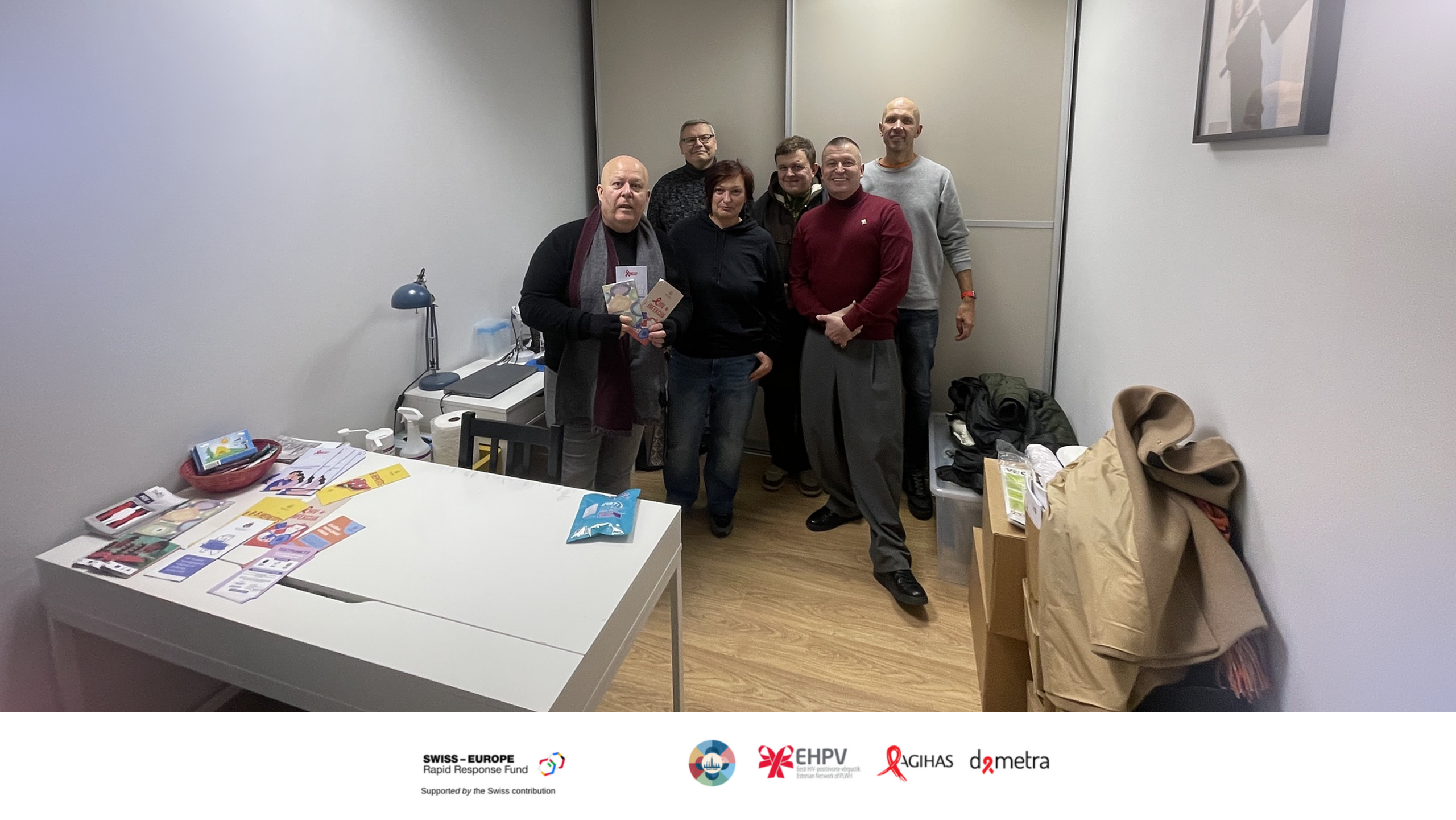
From 12 to 14 November 2026, representatives of the Estonian Network of People Living with HIV (EHPV) visited Riga, Latvia, as part of a study visit organised within the Swiss-supported RefAid BaltHUB project.
The visit focused on exchanging experience, discussing the situation of Ukrainian refugees in Estonia and Latvia, and exploring opportunities to strengthen cooperation between organisations providing support to people displaced by the war in Ukraine.
During the visit, EHPV representatives met with Latvian organisations AGIHAS and MOZAIKA, creating an opportunity for professional dialogue, practical exchange, and discussions about future joint initiatives.
Shared Challenges, Different National Contexts
Although Estonia and Latvia have different administrative and social support systems, Ukrainian refugees living in both countries may face similar challenges.
These include accessing healthcare and social services, navigating unfamiliar procedures, overcoming language barriers, finding reliable information, and receiving appropriate psychological and social support.
For people who have experienced displacement, these difficulties may become even more complex when combined with health concerns, financial insecurity, discrimination, or other challenging life circumstances.
During the study visit, participants discussed the current situation of Ukrainian refugees in Estonia and Latvia, comparing practical experiences and approaches to responding to individual needs.
Particular attention was given to people who may face additional barriers when accessing essential assistance.
The discussions highlighted an important principle: effective support requires not only the availability of services, but also clear and accessible pathways to those services.
Learning from Partners in Latvia
Meetings with AGIHAS and MOZAIKA provided an opportunity to learn more about the work of Latvian civil society organisations and exchange approaches to supporting Ukrainian communities.
Special attention was given to AGIHAS, the Latvian partner involved in implementing RefAid BaltHUB.
Participants discussed existing models of assistance, practical challenges, and opportunities to improve cooperation between organisations working with refugees and vulnerable communities.
For EHPV, the visit was also an opportunity to present its experience in Estonia.
This included information and counselling, assistance in navigating healthcare and social services, referrals to relevant professionals and organisations, and individual support for people facing complex circumstances.
By comparing approaches used in both countries, the participants explored how practical experience and knowledge could contribute to more coordinated and accessible assistance.
Digital Tools and Easier Access to Information
Another important topic was the role of digital solutions in helping people find reliable information and navigate available services.
For Ukrainian refugees, identifying the right organisation or understanding how to access assistance in a new country can be challenging.
Digital tools may help make information easier to find, improve communication, and support navigation between different service providers.
During the meetings, EHPV representatives shared perspectives on the development of digital information and navigation tools within RefAid BaltHUB.
The discussions also explored how organisations could strengthen information exchange and help people identify appropriate support options.
Technology can make information more accessible, but meaningful support still depends on cooperation, trust, and an understanding of people’s individual circumstances.
From Experience Sharing to Stronger Regional Partnerships
The study visit also included bilateral discussions about future cooperation between Estonian and Latvian organisations.
Participants identified shared challenges, considered areas where closer cooperation could be useful, and discussed opportunities for further joint initiatives.
One of the key themes was the importance of continuity of support.
For people who have experienced forced displacement, access to assistance should not become unnecessarily complicated because of administrative boundaries or differences between national systems.
Stronger connections between civil society organisations can help improve information exchange, coordinate approaches, and make it easier to identify relevant services when people need them.
These discussions represent an important part of developing RefAid BaltHUB as a regional initiative that connects organisations, professional expertise, community experience, and practical support.
Continuing Cooperation Across the Baltic Region
RefAid BaltHUB supports Ukrainian refugees in Estonia, Lithuania, and Latvia through cooperation between EHPV in Estonia, Association Demetra in Lithuania, and AGIHAS in Latvia.
The project combines information and counselling, peer-led and psychosocial support, service navigation, referrals, and practical assistance for people facing difficult circumstances.
The study visit to Riga contributed to this broader effort by strengthening dialogue with Latvian partners and creating opportunities to explore more coordinated approaches to supporting Ukrainian refugees.
EHPV sincerely thanks MOZAIKA and AGIHAS for their openness, professional exchange, constructive discussions, and willingness to explore opportunities for further cooperation.
The visit reinforced the importance of long-term partnerships built on trust, mutual learning, and a shared commitment to responding to people’s needs.
Effective humanitarian support does not stop at national borders. It grows through cooperation, shared knowledge, and a commitment to ensuring that people can access the assistance they need.
The RefAid BaltHUB project is implemented with the support of the Government of Switzerland.